
Coffee Processing Methods
First, what is coffee processing? Coffee processing is the method used to remove the cherry from the coffee bean. It significantly impacts the flavor profile of the final cup. Explore the three main coffee processing methods below.
Washed (Wet) Process
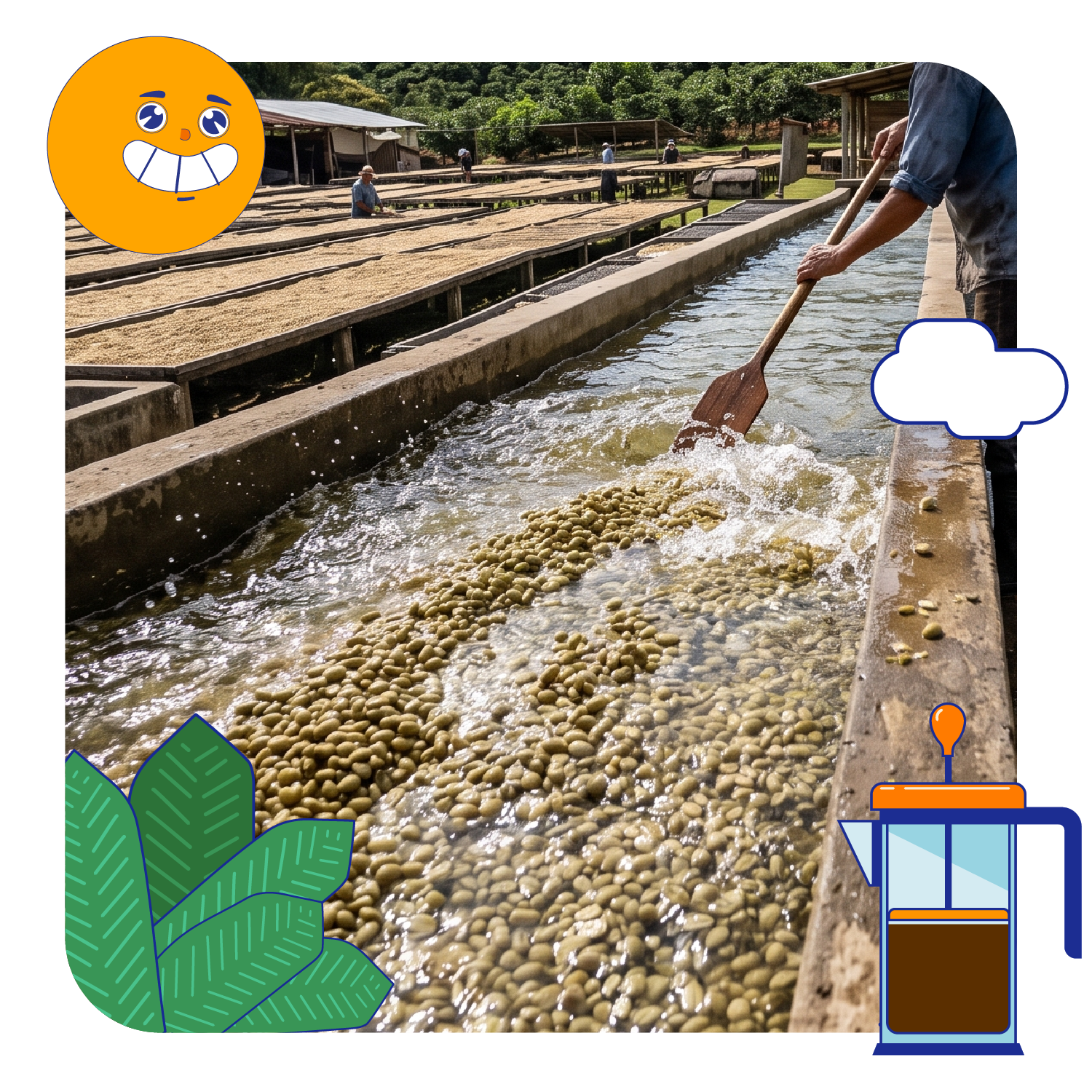
Method: The fruit is removed from the bean immediately after picking, before the beans are dried. The beans are pulped to remove the skin and then fermented to break down the mucilage (sticky layer). They are then washed thoroughly with water to remove any remaining mucilage before being dried.
Flavor Profile: This method typically results in a cleaner, brighter, and more acidic cup of coffee, allowing the true varietal characteristics of the bean to shine through.
Natural (Dry) Process
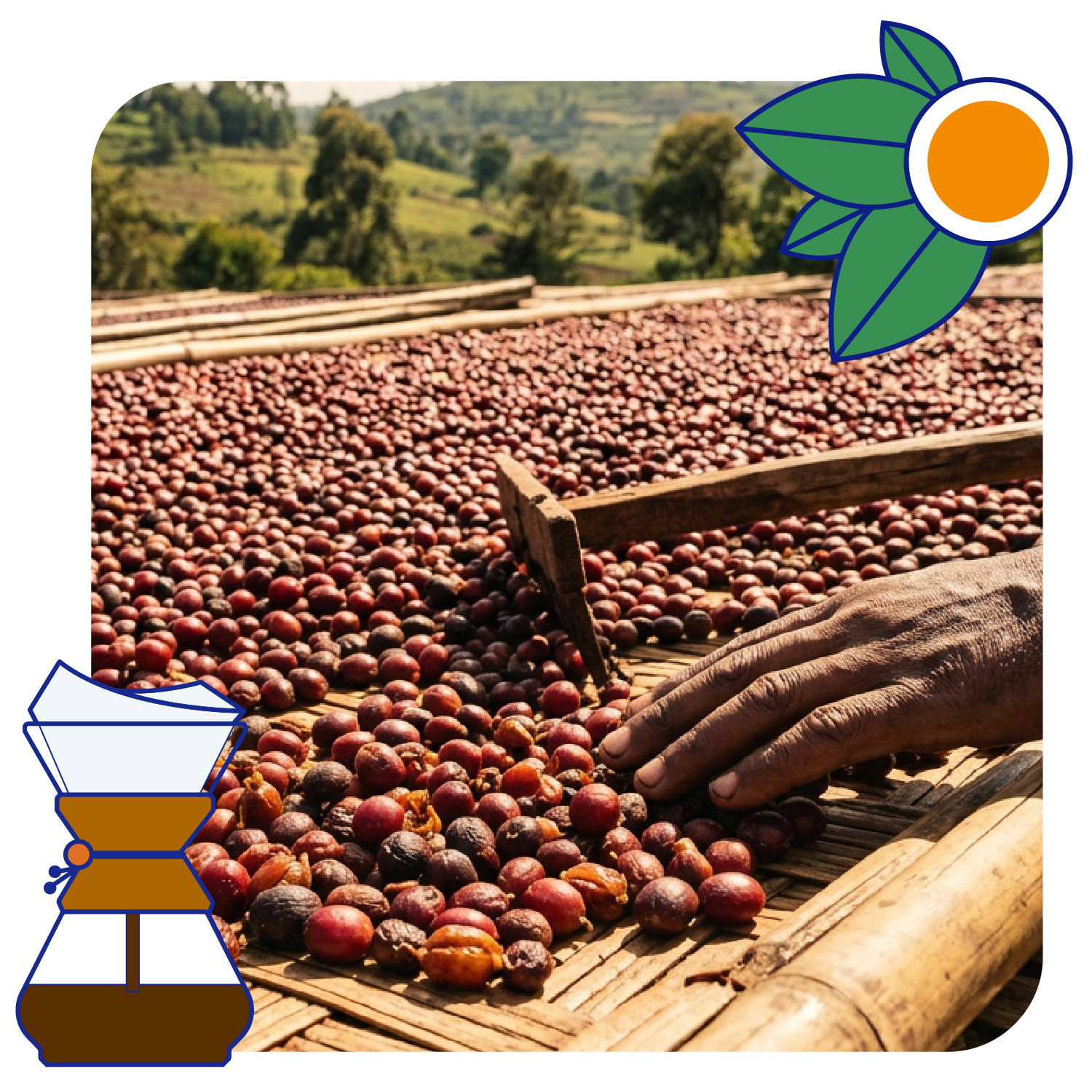
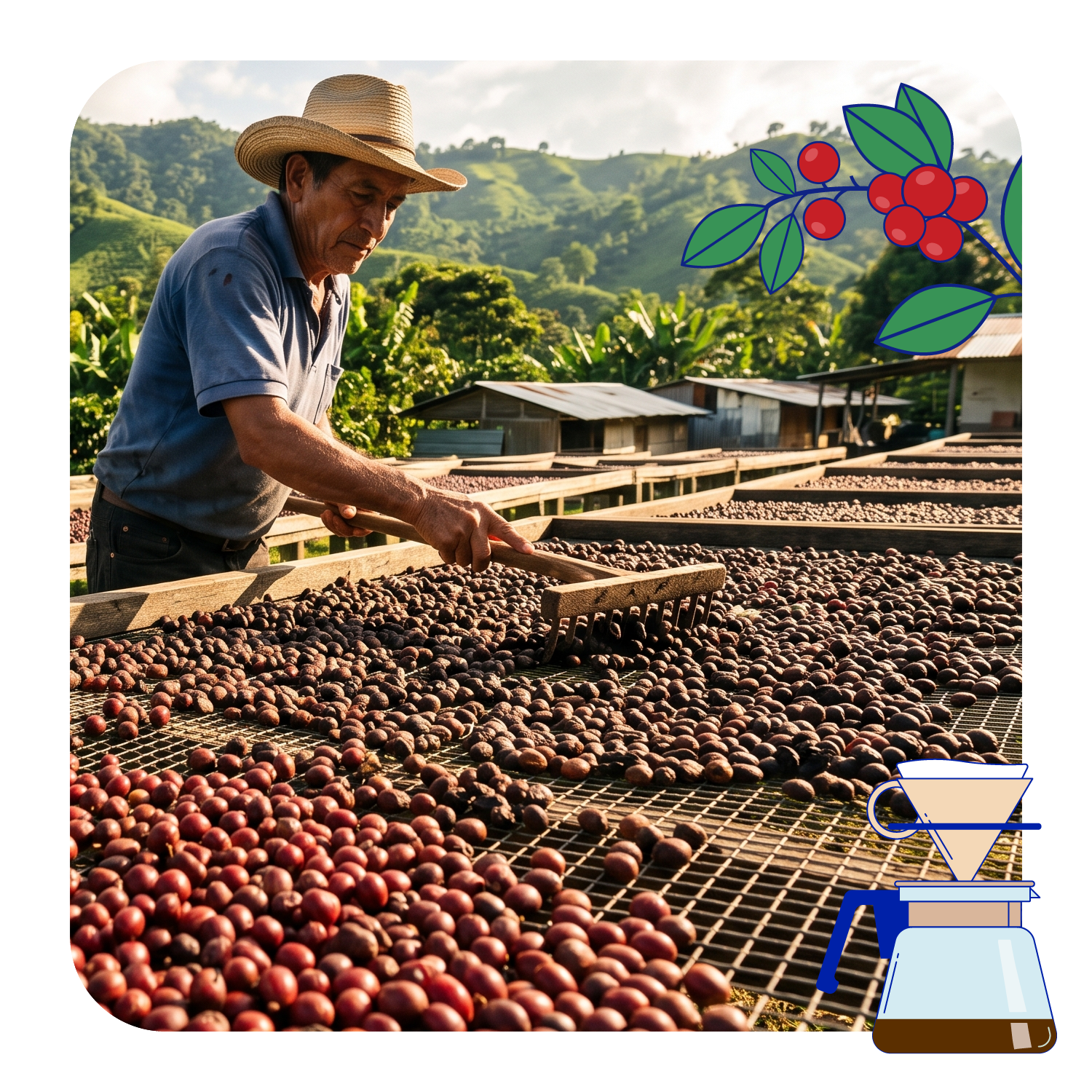
Method: This is the oldest and simplest method. The whole coffee cherry is laid out to dry in the sun, often on raised beds, immediately after being picked. The fruit dries around the bean, and once sufficiently dry, the skin and dried fruit pulp are removed.
Flavor Profile: Because the bean spends a significant amount of time in contact with the fruit, this process often imparts heavy, fruity, sweet, and sometimes winey or boozy notes to the coffee.
Honey (Pulped Natural) Process
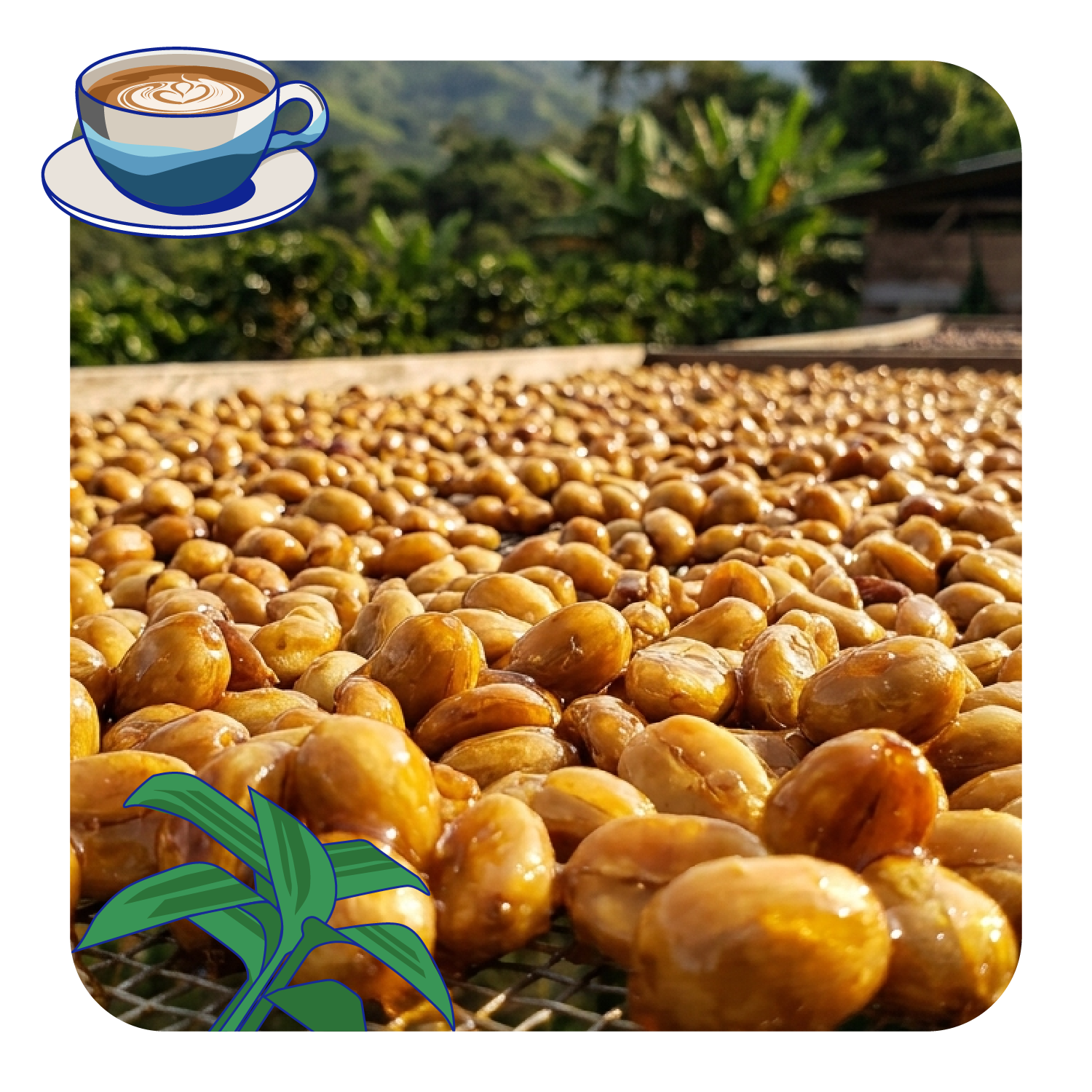
Method: A hybrid of the washed and natural processes. The skin of the cherry is removed (pulped), but the mucilage (often called "honey" because of its sticky, golden appearance) is left partially or fully intact on the bean while it dries. No fermentation is typically involved, and less water is used than in the washed process.
This process is classified into 4 main types - white, yellow, red, and black. The main difference with each process each the amount of mucilage left on the bean and the drying environment.
- White Honey - 80 - 100% of mucilage is removed yielding a light body with tea-like clarity and mild sweetness
- Yellow Honey - 50 - 75% of mucilage is removed yielding a clean, balanced cup with slightly sweeter profile than a washed coffee
- Red Honey - Up to 50% of the mucilage is left intact yielding a fruitier, syrupy flavor with more sweetness
- Black Honey - Almost all the mucilage is left intact yielding a complex, heavy-bodied flavor
Flavor Profile: This method strikes a balance, offering some of the bright acidity of a washed coffee but with added sweetness, body, and mild fruit notes often found in naturals. The resulting flavor is often clean and sweet.
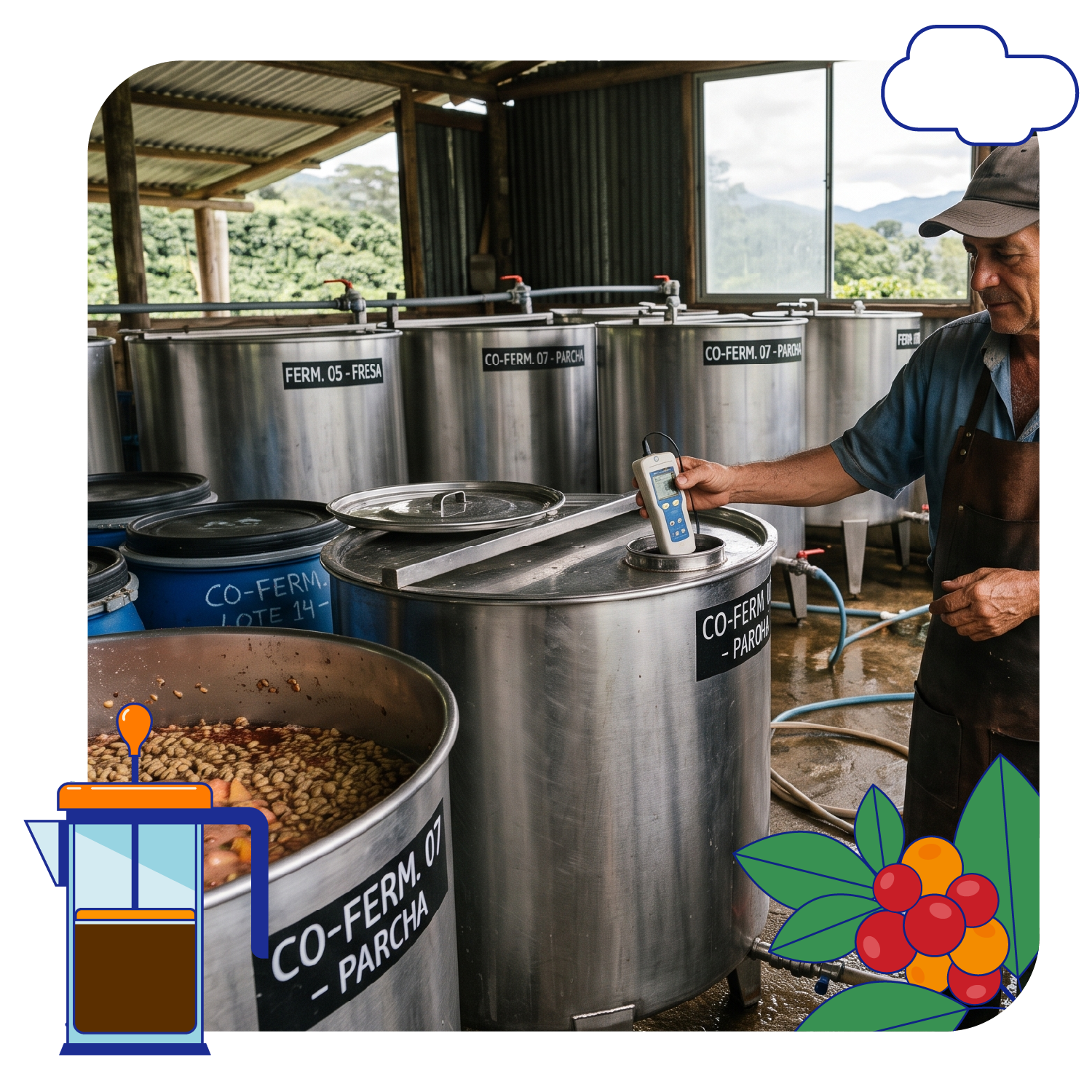
Co-Fermented Process
Method: Allowing coffee to ferment alongside non-coffee ingredients. Fermentation is part of any coffee's journey from farm to your cup and a defining stage in what you taste in your cup.
Co-fermentation is commonly done with fruit to influence the overall flavor. This is often done with fruit like strawberry, orange, melon, grape, passionfruit and even lychee. This is a more experimental process and exciting trend with innovative producers looking to push coffee flavor potential.
Flavor Profile: This method results in a highly intense flavor with deep fruit or floral notes and heavy candy-like sweetness. With this process, the beans are never artificially flavored, the co-ferment ingredient imparts a unique and often explosive flavor.