

Not just Colombian Coffee. Coffee from the Sierra Nevada de Santa Marta.
More than a coffee region, a geographical phenomenon.
Meet our local coffee region
The Sierra Nevada de Santa Marta coffee refers to coffee grown in the Sierra Nevada de Santa Marta mountain range in northern Colombia, a region known for its extreme elevation, rich biodiversity and highly distinctive flavor profiles. As the highest coastal mountain range in the world, the Sierra Nevada creates a rare growing environment where warm Caribbean air meets cool mountain climates, producing coffees that are naturally balanced, expressive, and complex.
Coffee from this region is recognized for its medium to full body, smooth finish and layered flavor notes that often include dark chocolate, fruit and natural sweetness. These characteristics develop slowly due to the region’s elevation and stable growing conditions, allowing sugars to form more completely within the coffee cherry.
Despite its exceptional quality, Sierra Nevada coffee remains underrepresented compared to other Colombian regions. Its remote geography, smaller farm sizes and lower production volumes make it less widely distributed, but also more distinctive and traceable. For those exploring specialty coffee, it remains one of the most compelling and undiscovered origins.
At Vivolo Coffee, this region is at the core of what we do. Based in Santa Marta, we work directly within the Sierra Nevada de Santa Marta to source, evaluate and roast coffee at origin, creating a direct connection between you and some of Colombia’s most distinctive coffees.
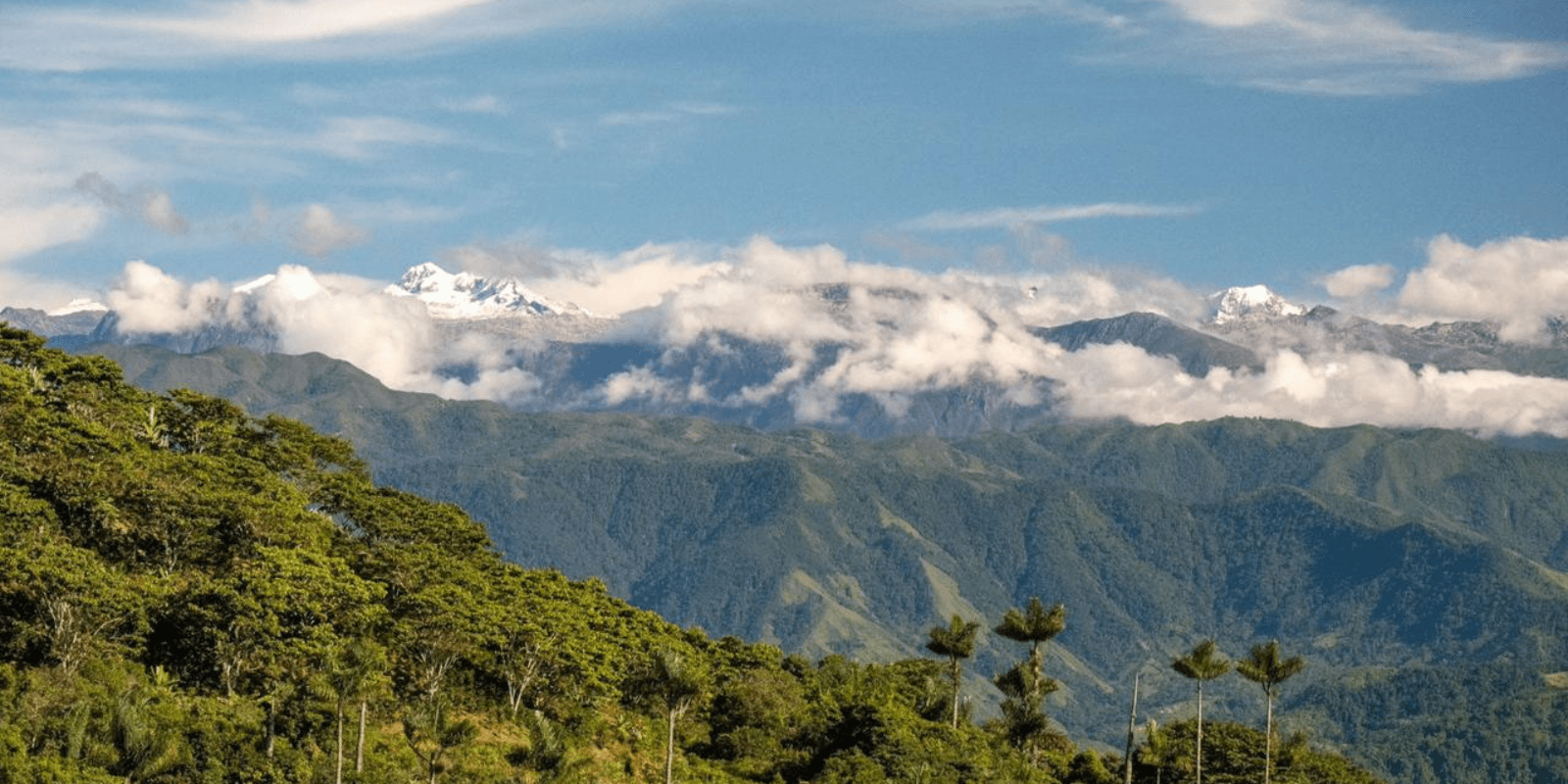
Where is the Sierra Nevada region located?
The Sierra Nevada de Santa Marta is located in northern Colombia along the Caribbean coast, just outside the city of Santa Marta.
What makes this region unique is its dramatic geography. It rises from sea level to over 5,700 meters (18,700 feet), making it the highest coastal mountain range in the world.
Coffee is typically grown at elevations between 1,000 and 1,800 meters.
This rapid elevation gain creates a wide range of microclimates within a relatively small area. Farms located just miles apart can produce noticeably different coffees due to variations in temperature, rainfall and altitude.
This combination of coastal proximity and mountainous terrain is rare in global coffee production and plays a major role in shaping the character of Sierra Nevada coffee.

Our Café Roots
What Makes Coffee from the Sierra Nevada de Santa Marta so unique?
The Sierra Nevada de Santa Marta produces unique coffee because of the interaction between altitude, climate, soil and biodiversity.
Altitude
Higher elevations slow the development of coffee cherries. This extended maturation period allows sugars to develop more fully, resulting in greater complexity and balance in the cup.
Climate
The region benefits from two distinct air systems:
- Warm, humid air from the Caribbean Sea
- Cool air descending from the mountain peaks
This creates a stable environment with consistent temperatures and gradual ripening. The result is coffee that develops evenly, contributing to clarity and consistency in flavor.
Soil
The soil in the Sierra Nevada is naturally fertile and mineral-rich. These conditions support healthy plant growth and contribute to the depth and structure of the final cup, often enhancing both sweetness and body.
Biodiversity
The region is one of the most biodiverse ecosystems in the world. Many farms use shade-grown practices within native forest environments. The practices help to:
- Regulate temperature
- Protect soil health
- Support long-term sustainability.
They also influence how the coffee develops, often resulting in more nuanced and layered flavor profiles.
Together, these factors produce coffee that is:
- Balanced
- Naturally sweet
- Layered
- Expressive
Another factor that contributes to the uniqueness of Sierra Nevada de Santa Marta coffee is the relative isolation of many farms. Because production takes place in more remote areas, farming practices are often less industrialized and more closely tied to traditional methods. This can result in greater variation from farm to farm, but it also allows for more distinct and expressive coffees. The combination of isolation, microclimate variation and small-scall production creates a level of diversity within the region that is difficult to replicate elsewhere.

The experience in your cup
Flavor Profiles of Sierra Nevada Coffee
Sierra Nevada coffee is known for being both approachable and distinctive, making it an ideal entry point into specialty coffee while still offering depth for experienced drinkers.
Common tasting notes:
- Dark chocolate
- Blueberry
- Panela
- Subtle citrus
Cup characteristics:
- Medium to full body
- Smooth and clean finish
- Balanced acidity
These flavors are the result of slow cherry development, stable climate conditions and careful post-harvest processing. The chocolate notes tend to provide a familiar base, while fruit characteristics like blueberry or citrus add brightness and complexity without overwhelming the cup.
In many cases, the sweetness found in Sierra Nevada coffee is more rounded and natural compared to shaper profiles from other regions. This makes it especially versatile for different brewing methods, from drip coffee to pour-over.
Compared to more widely known Colombian regions, Sierra Nevada coffees often feel more balanced and integrated. Instead of highlighting a single dominant note, they tend to present a layered profile where chocolate, fruit and sweetness work together.
Brewing methods can also influence how these flavors present. In pour-over methods, the clarity of the cup often highlights fruit notes and acidity, while immersion methods like French press tend to emphasize body and chocolate depth. This adaptability is one of the reasons Sierra Nevada coffee appeals to a wide range of coffee drinkers, from those new to specialty coffee to those seeking more nuanced flavor experiences.
The combination of chocolate depth and fruit brightness is a defining characteristic of this region. It is a profile that feels familiar, but more refined and expressive than traditional coffee.

Stewards of the Land
Coffee Farming in the Sierra Nevada region
Coffee farming in the Sierra Nevada de Santa Marta is largely driven by family-run operations.
These farmers often rely on methods that prioritize quality over volume, including:
- Hand-picking only ripe cherries
- Shade-grown cultivation
- Small-scale processing
In addition to these practices, many farms use traditional washed processing methods, where the coffee cherry is removed and the beans are fermented and cleaned before drying. This process helps highlight clarity and balance in the final cup. Some producers also experiment with natural or honey processing, which can enhance fruit-forward characteristics and sweetness.
Drying is typically done using raised beds or patios, depending on the farm’s resources and climate conditions. Because of the region’s varied microclimates, drying times can differ, which further contributes to the diversity of flavor profile across farms.
Harvest timing is another important factor. The steady climate for consistent ripening, which supports selective picking and improves overall quality.
In many cases, farmers also manage multiple steps of production on-site, from harvesting to drying. This level of involvement allows for greater control over quality, but it also requires a high level of skill and consistency. Small changes in fermentation time or drying conditions can significantly impact the final flavor, making experience and attention to detail essential at every step.
Because farms are smaller and often located in remote areas, production volumes are lower than in larger Colombian regions. Transportation and logistics can also be more complex due to mountainous terrain. This contributes to why Sierra Nevada coffee is less widely available.
However, this approach allows for:
- Greater attention to detail
- Stronger traceability
- More direct relationships between producers and buyers
Coffee from this region reflects not only the environment in which it is grown, but also the experience and care of the farmers behind it.

Sourcing with Intention
How we source coffee in the Sierra Nevada
Vívolo Café is based in Santa Marta and specializes in coffees sourced directly from within the Sierra Nevada de Santa Marta region.
Our location gives us direct access to the farms and producers that we work with. We are not sourcing from a distance. We operate within the region.
We work closely with a trusted network of small farmers, building relationships that allow for:
- Full traceability from farm to cup
- Consistent quality across every lot
- Fair pricing based on quality and production cost
Every coffee we offer is personally evaluated, selected and certified at origin by Gustavo Valderrama, one of Colombia’s leading CQI-certified Q graders and SCA-certified sensory analysts. This means:
- Every lot is cupped and approved before export
- Flavor profiles are verified and consistent
- Quality is measured, not assumed
This evaluation process ensures that each coffee reflects both the standards of specialty coffee and the unique characteristics of the Sierra Nevada region.
Being based in Santa Marta also allows for more immediate feedback between evaluation and sourcing. Coffees can be assessed closer to the point of production, which supports more accurate selection and a better understanding of how each lot reflects its specific farm and conditions. This proximity helps maintain consistency while still preserving the individuality of each coffee.
Our coffees are then roasted in small batches at origin, preserving freshness and maintaining the integrity of the coffee from farm to final cup.
We do not just source coffee from the Sierra Nevada de Santa Marta. We live here, work here and build our entire approach around it.
Frequently Asked Questions
Everything you need to know about the Sierra Nevada de Santa Marta coffee region and where Vívolo Café was born.
Sierra Nevada coffee is coffee grown in the Sierra Nevada de Santa Marta region of northern Colombia, known for its high elevation, unique climate, and balanced, complex flavor profiles.
It is grown in the Sierra Nevada de Santa Marta mountain range near the Caribbean coast of Colombia, primarily at elevations between 1,000 and 1,800 meters.
The region is located in northern Colombia, surrounding the city of Santa Marta along the Caribbean coastline.
Its uniqueness comes from the combination of:
- High altitude
- Tropical and mountain climate interaction
- Fertile soil
- Biodiversity
These factors create a balanced and expressive coffee that is distinct from other Colombian regions.
Yes, much of the coffee produced in the Sierra Nevada de Santa Marta meets specialty coffee standards due to careful farming practices, selective harvesting and attention to processing. Its traceability and consistent quality make it well-suited for specialty markets.
At Vívolo all of our coffees are certified as Specialty Colombian Coffee.
Sierra Nevada coffee is typically more balanced and rounded compared to other Colombian regions. While some regions emphasize bright acidity or bold fruit notes, Sierra Nevada coffees often combine chocolate depth, natural sweetness and subtle fruit for a more integrated and approachable profile.
Coffee from this region is less common due to smaller farm sizes, lower overall production and more complex logistics. The mountainous terrain can make transportation and export more challenging, which limits how widely the coffee is distributed compared to larger Colombian regions.
Many farms in the region use environmentally conscious practices such as shade-grown cultivation and limited chemical input. The region’s biodiversity and farming methods often support long-term sustainability, though practices can vary by producer.